3D printers
3D printers have come a long way.
One evening in 2014 my wife and I were on an evening walk in our neighborhood. We were passing by a library, still open despite it being quite late. Out of curiosity we walked in, not expecting much. What came out of it was my wife joining a book club, and I learned about 3D printing, which significantly altered my life.
You see, at this time in the library there happened to be a monthly 3D printer club meeting. The meeting ran for a couple of hours, so it was quite lucky we stumbled upon it. The person running the meeting - Frank - was showcasing a fidget being printed on a Makerbot Replicator. I was mesmerized seeing how the machine was slowly moving and putting a layer after layer of plastic to form a finished piece.
It was at this moment that my journey into 3D printing started. I signed up for the club, was a frequent member, and soon got my first printer. It was Wanhao Replicator i3.
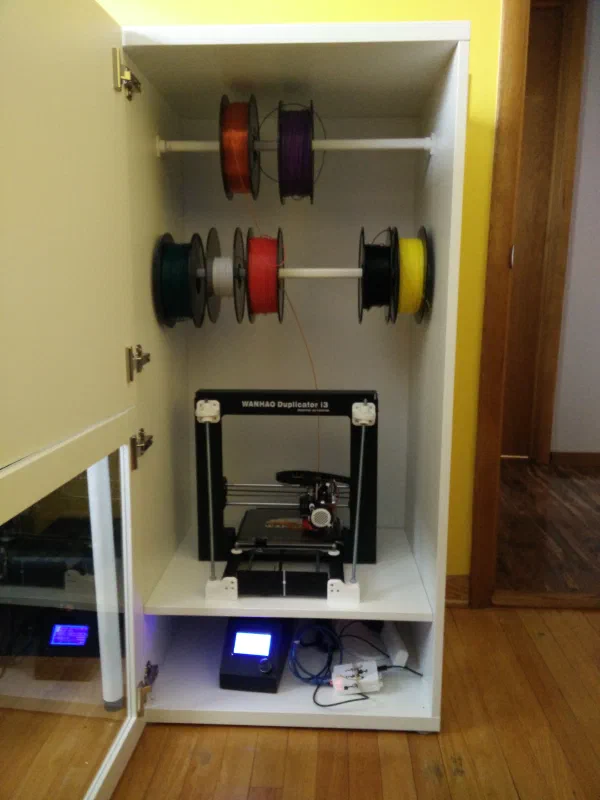
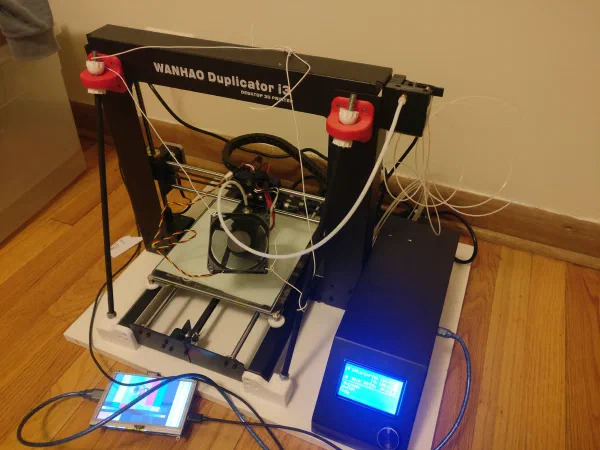
I started modding the printer pretty much right away, as it was custom at the time. First prints were leveling knobs, frame stiffeners, a better fan shroud and funnel - a typical journey of an owner of i3 or anet a8 style machine at the time. The machine was also finicky, with frequent filament jams, issues with first layer adhesion and overall inconsistency in how it ran.
By the time better printers showed up on the market, my Wanhao was very heavily modded and had little to do with stock version. Between custom parts and custom firmware I spent hundreds of hours on this machine. I will not lie if I say there was a 25% chance any given week that the printer was down for days because the hotend decided to call it quits or the PLA being ever so slightly out of spec.
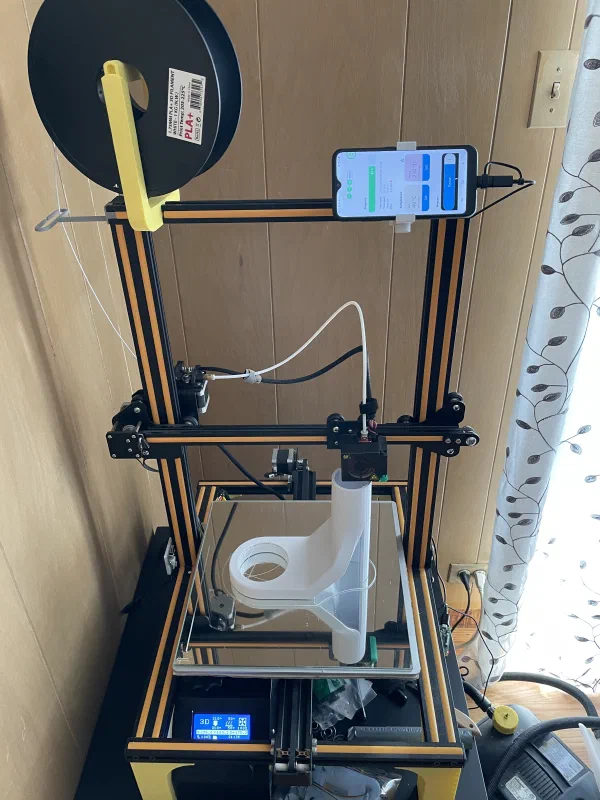
Still, I really enjoyed this hobby. So much so I replaced Wanhao with Creality CR10. At the time Creality was a new company on the market with much easier to use printers that had several advantages over previous generations of printers. Leveling was easier. Hotend didn’t clog as much. And support on the forum for typical issues was so much better, not to mention aftermarket parts were easier to find.
That printer served me well and I used it pretty much every week. I started using PETG as the filament more often, printed massive sculptures and detailed parts on it. It was a solid workhorse that did 100s if not 1000s of hours of print time over the years.
It was not without issues though. Extruder was hilariously weak. SD card reader was not the best quality. And lack of auto bed leveling was starting to become a problem at the size the printer had.
Creality was the end of the run of hobbyist level of printers in my opinion. Once printers like Ender 3 and its various clones flooded the market, and larger companies noticed, we moved into the true “just works” era of 3D printers. I’ll talk about them at another time though.